Katori Titanium Cutting Board: Is It Actually Worth the Upgrade?
We looked past the marketing claims to see how titanium cutting boards really compare to what's already in your kitchen — including the one drawback most reviews don't mention.
Check Today's Price →Independent, ad-supported review. May contain affiliate links — see our Affiliate Disclosure.
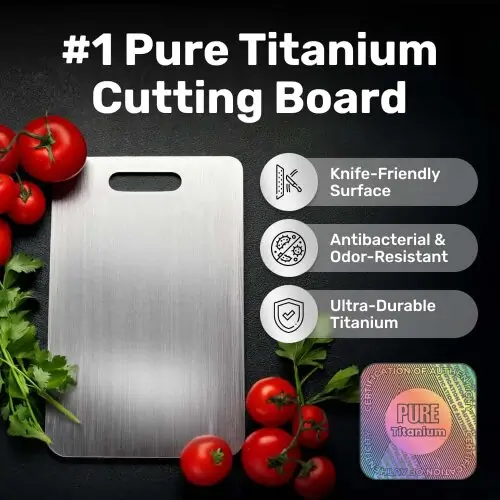
- Worth it? Yes, if you want a non-porous, stain- and odor-resistant surface and don't mind a learning curve with your knives.
- Best for: Home cooks who prioritize hygiene, easy cleanup, and a premium feel over keeping factory-sharp knife edges as long as possible.
- Main advantage: Non-porous titanium surface that resists stains, odors, and bacteria buildup better than wood or plastic.
- Main drawback: Like other metal cutting surfaces, it's harder on knife edges than wood or plastic — you'll likely sharpen more often.
- Better alternative if knife longevity is your top priority: a quality wood board.
The Problem With Traditional Cutting Boards
If you've used the same wooden or plastic cutting board for a couple of years, you already know the issues: deep knife grooves that trap bacteria and odors, discoloration from raw meat or beets, and a surface that never quite feels "clean" no matter how well you scrub it.
That's the gap metal cutting boards — titanium and stainless steel — are designed to fill. Both are non-porous, meaning liquids, oils, and food particles can't soak into the surface the way they do with wood or plastic.
The question isn't whether metal boards solve that problem. They do. The real question is what you give up to get there — and that's where most product pages stop being honest.
Titanium vs. Wood vs. Plastic vs. Stainless Steel
| Criterion | Titanium | Stainless Steel | Wood | Plastic |
|---|---|---|---|---|
| Hygiene (non-porous) | Excellent | Excellent | Poor | Fair |
| Stain / odor resistance | Excellent | Good | Poor | Fair |
| Weight | Light | Heavy | Medium–Heavy | Light |
| Knife-friendliness | Below average | Below average | Excellent | Good |
| Durability | Excellent | Excellent | Good (with care) | Fair |
| Typical price range | $$$ | $$ | $–$$$ | $ |
Based on independent material comparisons and cutting-board sharpness testing.
Key takeaway: if hygiene and stain resistance matter most to you, titanium is a strong pick. If keeping your knives factory-sharp for as long as possible is the priority, wood still wins.
Katori Titanium Cutting Board — What It Actually Offers
The Katori Titanium Cutting Board is a double-sided titanium prep surface positioned as a premium alternative to conventional plastic and wooden boards. Based on the manufacturer's product page, it's built around a few core claims:
- Non-porous titanium surface designed to resist stains and odors
- Double-sided design for extra usable surface
- Scratch- and heat-resistant construction
- Marketed as a more hygienic alternative to plastic and wood
These are reasonable, plausible claims for a titanium product — consistent with how titanium behaves as a material in general (see the comparison table above). We're not independently verifying every specific number the brand publishes, and you should treat marketing superlatives ("America's #1 rated") as marketing, not a third-party ranking.
A note on pricing and reviews: Katori is sold across more than one storefront online, and prices, discount percentages, and review counts vary depending on which page you land on. Always confirm the current price and offer details on the actual checkout page before buying.
What We Like — and What to Know First
What we like
- Non-porous surface — no grooves for bacteria or residue to hide in
- Resists stains and odors noticeably better than wood or plastic
- Lightweight for a metal cutting board
- Dishwasher-friendly (verify on your specific model's listing)
- 30-day money-back guarantee
What to know before buying
- Harder on your knife's edge than wood or plastic — expect to sharpen more often
- Metal-on-metal contact can be noisier during chopping
- Pricing and review counts vary across storefronts — confirm at checkout
- Costs more upfront than a basic plastic or wood board
Who It's For — and Who Should Skip It
Good fit if you...
- Want a low-maintenance, easy-to-clean prep surface
- Are bothered by stains, odors, or bacteria buildup on your current board
- Use standard kitchen knives and sharpen periodically anyway
- Want a lightweight metal board rather than a heavy stainless-steel one
Look elsewhere if you...
- Use expensive Japanese chef's knives and want to preserve the edge as long as possible
- Prioritize a completely silent cutting experience
- Are on a tight budget and a basic plastic board already works fine
Pricing and Guarantee
The offer currently advertises a limited-time discount, though the exact percentage and price vary depending on the storefront. Always confirm the final price on the official checkout page before completing your purchase.
Guarantee: 30-day money-back guarantee. As with any promotional offer, confirm the return process and timeframe on the checkout page at the time of purchase.
Check Today's Price →Best Alternatives, Depending on What You Need
For knife longevity
A quality end-grain wood cutting board keeps blades sharper for longer, at the cost of more upkeep.
For an industrial feel
A stainless steel cutting board offers similar hygiene benefits with more heft and a lower price.
For a tight budget
A mid-range plastic or composite board still beats an old, grooved wooden board on hygiene.
Frequently Asked Questions
Is the Katori Titanium Cutting Board worth it?
Does titanium dull knives faster than wood?
How does it compare to stainless steel?
Is it dishwasher safe?
What's the return policy?
Are there cheaper alternatives?
Final Verdict
The Katori Titanium Cutting Board delivers on the core promise of titanium as a material: a non-porous, stain- and odor-resistant surface that's genuinely easier to keep clean than wood or plastic. That part isn't hype.
What it doesn't change is physics — metal surfaces are harder on knife edges, and that's true of titanium boards in general, not just this one. If you're comfortable with that trade-off in exchange for better hygiene and easier cleanup, this is a solid pick. If preserving a razor edge on expensive knives is your top priority, a wood board will still serve you better.
Best for: home cooks prioritizing hygiene and easy cleaning over knife-edge preservation.
Skip if: you use premium knives you want to keep factory-sharp for as long as possible.